USB-UART adapter
What it does
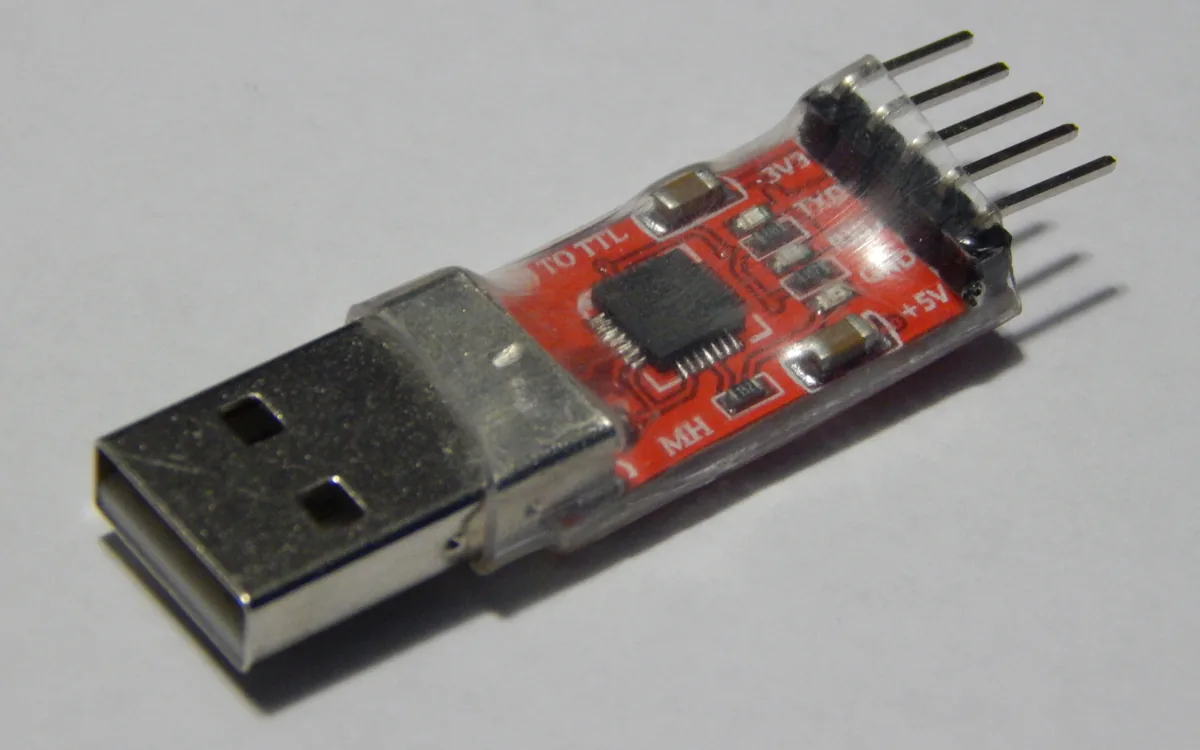
A USB-UART adapter (an FTDI FT232RL, or a clone built around a CP2102/CH340) bridges your USB port to a device's TTL serial console. Most embedded debug consoles speak plain UART logic levels, not RS-232 or USB, so this is the reference tool for reaching a boot log, a bootloader, and sometimes an unauthenticated root shell.
Use cases
Wire TX/RX/GND to a header and watch the kernel and init scripts scroll by the moment the board powers on.
Catch the autoboot countdown and drop into U-Boot (or an equivalent) before the OS starts, then poke at its environment.
Consoles left in debug builds sometimes drop straight to a shell, no credentials needed.
How you use it
Wiring is crossover: adapter TX to target RX, adapter RX to target TX, and GND to GND. Then talk to the console. Reach for emon, Espilon's serial monitor: its PTY-bridge mode holds the port open without triggering the hardware reset a plain terminal fires the moment it asserts the control lines, and it flags crashes and boot events by pattern so a panic surfaces instead of scrolling past. picocom or screen stay fine as a minimal fallback if emon is not installed.
emon /dev/ttyUSB0                                  # recommended: watch the console (no reset on open)
emon --verbose -p patterns/esp32.pat /dev/ttyUSB0  # flag crashes and boot events by pattern
# minimal fallback, a plain terminal at a guessed baud:
picocom -b 115200 /dev/ttyUSB0
# garbage on screen -> wrong baud or TX/RX swapped, try 9600 / 57600
Wiring
Match the logic level. Most boards are 3.3V. Set the adapter's jumper to 3V3 and never drive 5V into a 3.3V pin.
Do not power the board from the adapter. If the target already has its own supply, connect GND only - powering both sides can fight or fry a pin.